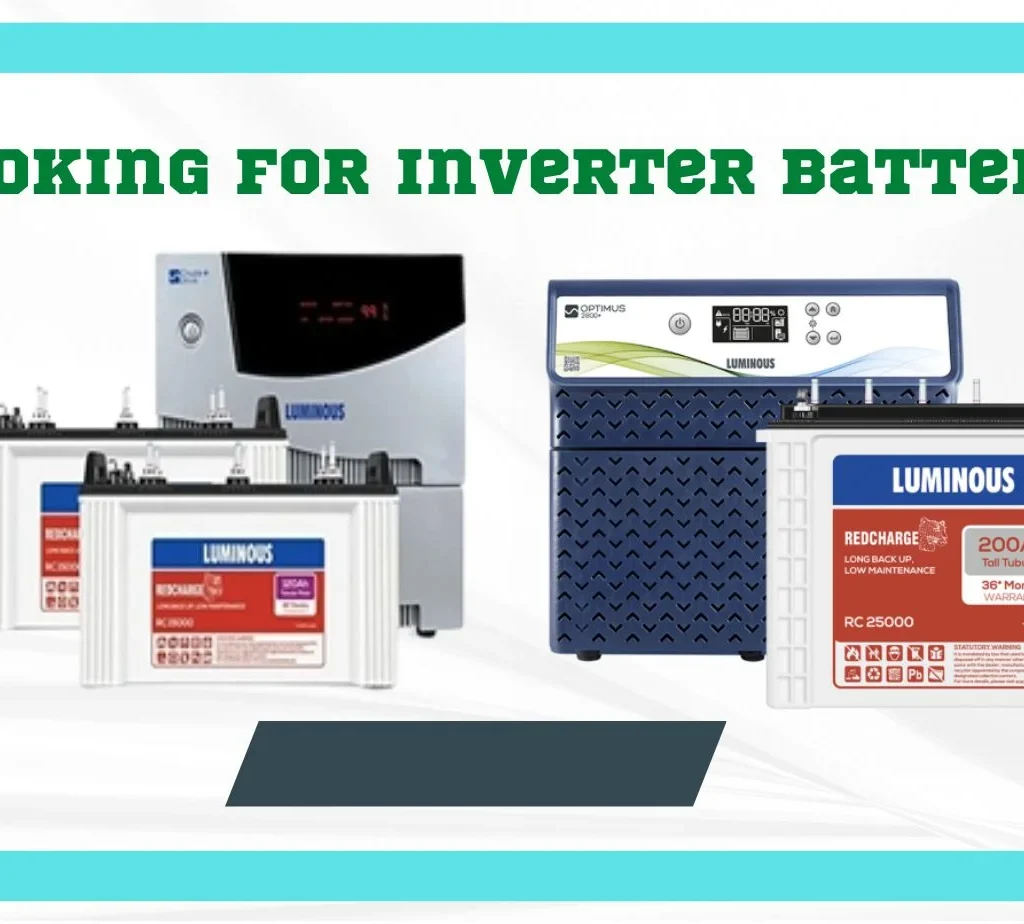
Briefly explain what a home inverter does: it converts direct current (DC) stored in batteries into alternating current (AC) to power home appliances during a blackout.
Highlight its role in providing backup power for essential household devices, such as fans, lights, and sometimes heavier appliances like refrigerators and televisions.
- Pure Sine Wave Inverters: Explain that these inverters provide a smooth power output, ideal for running sensitive appliances (televisions, computers, etc.).
- Modified Sine Wave Inverters: Mention that these are more affordable but less efficient for sensitive devices.
- Square Wave Inverters: Usually the cheapest, suitable for basic applications like lights and fans, but not recommended for sensitive equipment.
Recommend pure sine wave inverters for better performance and safety, especially for modern homes in India.
Power Requirements: Guide readers on calculating their home’s power needs. Provide a formula for estimating total wattage (sum of wattages of appliances they want to run during a power outage).
Inverter Capacity: Explain inverter capacity in VA (Volt Ampere) and how it should be chosen based on power consumption. Provide a typical range of inverters (600 VA to 2000 VA) for different household needs.
Battery Compatibility: Discuss the importance of selecting a battery with the right AH (Ampere-hour) rating to provide sufficient backup time. A larger AH battery gives longer backup.
Provide a list of trusted brands offering high-quality inverters in India, along with a brief description:
- Luminous: Known for affordable, high-performance inverters with a range of options for different capacities.
- Microtek: Offers reliable products, especially known for pure sine wave inverters.
- Exide: Well-known for batteries, but also offers inverter systems with good durability.
- V-Guard: Popular for energy-efficient and durable inverters with customer-friendly service.
- Su-Kam: Offers innovative solutions, focusing on energy-saving and intelligent inverters.
Briefly mention eco-friendly alternatives, such as solar-powered inverters, which are gaining popularity in India. Though more expensive initially, they offer long-term savings by utilizing renewable energy.